

Allamej is a hybrid language constructed by Rodrigo Solano as a representation of human diversity coexistence through the consciousness of hybridization. It is not intended to be a primary spoken language, but rather an artistic representation of diversity and an encouragement of an inclusive mindset.
Experts assert that humans are symbolic beings. They are born into their languages and become subordinated to whatever they learn through them. People become attached to the content of their language, which becomes part of their inner selves and ego. However, this attachment can emotionally alienate them from reality, especially considering that humans are diverse and often exposed to cultural differences.
Language itself serves as a symbolic place where humans are segregated. Allamej aims to be a symbolic space that prompts individuals to reflect on their attitudes toward cultural diversity.
A Hybrid Language
We use language to think, express, and convey meanings. Allamej is a hybrid language constructed by Solano, drawing from multiple spoken languages around the world.
It incorporates elements from language families such as Bantu, Germanic, Greek, Indic, Japanese, Latin, Malay, Persian, Quechua, Semitic, Sino-Tibetan, Slavonic, Thai, Turkic, Tupian, Yoruba, and other linguistic contributions. The purpose of this linguistic blend is to represent the coexistence of human diversity by creating words based on different cultural contexts and weaving them together into a cohesive language.
To ensure compatibility among these diverse words, their meanings must sometimes reflect our shared existence as humans. For instance, terms like ‘Truth,’ ‘God,’ and ‘Reality’ pose challenges when we live in separate linguistic and cultural spheres. By reviewing these concepts, we can better embrace the reality of human diversity.
A Symbolic Intercultural Place
The inspiration for Allamej initially stemmed from Esperanto. However, there are significant differences between the European-centric origins of Esperanto and the purpose behind creating Allamej.
As a suburban Brazilian mestizo, Solano developed Allamej to reflect his own observations and the hybrid local culture—a common feature in Latin America. This culture encompasses not only Latin-based languages but also a rich blend of influences from various ethnic backgrounds and regions. Initially, Allamej was not meant to be a spoken language; rather, it served as a tool for questioning and exploring cultural diversity.
Recognizing
the world as Hybrid
From this perspective, Allamej introduces the idea that hybridization isn’t exclusive to Latin America. It’s a historical global process resulting from interactions among diverse people for various purposes. Throughout history, empires engaged with one another, encompassing a multitude of ethnic groups and cultures.
The exchange of goods and knowledge exemplifies intercultural production. For instance, beer likely originated in the Middle East and is now celebrated worldwide, just as the potato, originally from the Americas, has become a staple in European traditional cuisines.
The Phoenician writing system played a pivotal role, giving rise to alphabets such as Arabic, Greek, Hebrew, and Latin—a testament to human development. In truth, it’s challenging to find anything untouched by the influence of other cultures. Thus, interculturality signifies progress Allamej honors the contributions of every people, tribe, or civilization, uniting them symbolically against primitive instincts of supremacy and segregation.
Structure
Allamej is constructed by importing words from various languages and adapting their shape and written form to fit the Allamej structure. Think of it as adding blocks to build a diverse village. The image below provides an illustration of how Allamej meanings are assembled:
Allamej Word Building

If you’re not a language expert, the illustration demonstrates that words are imported from languages spoken in various cultures and then modified to fit the Allamej structure. This structure is quite regular: each syllable follows a predictable format that contributes to the overall meaning. By combining syllables, more and more words are formed.
The etymology of the term ‘Allamej’ speaks volumes about its inclusive intent. It consists of three radicals:
- ‘Al’: Borrowed from Germanic (where it means ‘alles’ in German or ‘all’ in English), it signifies ‘whole’ or ‘everything.’
- ‘Lam’: A Semitic radical derived from Arabic (‘عالم’ [ʔalam]) and Hebrew (‘עולם’ [ʔolam]), it translates to ‘world.’
- ‘Ej’: Originating from Yoruba (‘èdè’ for ‘language’ and ‘Èṣù’ for the mythical deity of communication).
This process of constructing words to create new logical meanings is common in many languages, including Chinese, German, Tupi, and Turkish. However, in Allamej, words draw inspiration from different languages, cultures, and meanings.
Script
Allamej possesses its own alphabet, which also has hybrid origins. This alphabet can be represented in ways reminiscent of cursive scripts, such as Arabic, old Latin, Cyrillic, and Mongolian.
Interestingly, hybridized people are prevalent both in Latin America and in the Muslim world. This phenomenon occurs in other cultures as well, sometimes more prominently and sometimes less so.
As examples, let’s examine the roots used to construct the word “diversity.” First, we’ll explore them in standard Allamej alphabets, and then we’ll showcase stylized versions that evoke their origins.
Allaminmünyuj in Standard Allamej Alphabet:


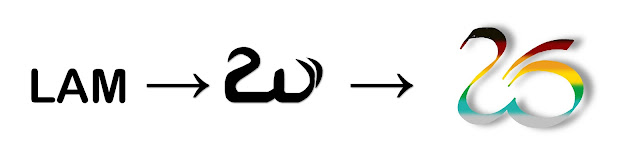
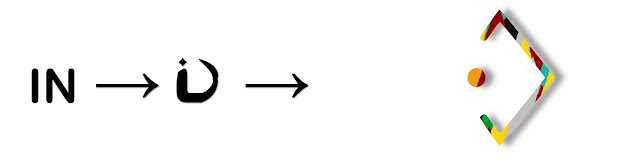


Video About Allamej Alphabet
Colors
Allamej is often depicted alongside images in seven different colors, each representing significant elements that have sparked interactions between different peoples. These interactions have sometimes led to negative consequences, but more often, they have resulted in the blending of cultures and peoples. The color diversity in Allamej draws inspiration from the “Fitas do Nosso Senhor do Bonfin” a symbol associated with Bahia, where it is believed that the Portuguese first arrived in Brazil.
These seven colors hold cultural significance across various traditions:
❶ Silver White: Symbolizes the wealth that motivated international trade.
❷ Sea Green-Blue : Symbolizes the wealth that motivated international trade.
❸ Nature Green: Reminds us of the original natural resources found in every region of the planet and emphasizes sustainability.
❹ Gold and Sand Yellow : Recognizes the deserts that linked the West to the East along the Silk Road and connected Africa to the Mediterranean and the Middle East.
❺ Spicy Orange: Alludes to masala—a mix of spices—that played a role in the logistical and intercultural development of nations.
❻ Brazilian Wood and
Royal Red: Represents India cinnamon and brazilwood, which were part of long journeys that integrated diverse peoples.
❼ Skin Black: The final color and the highest number, honoring the diverse non-white populations that have contributed to international culture.
Inspiration Trip for Allamej Colors
Productions
Allamej serves as a symbol of interculturality, peace, and unity. It encourages self-reflection by exploring our beliefs and values. Notably, it highlights how language and its creations play a significant role in both connecting and dividing humanity. Consider the following aspects:
- Frontiers: Language shapes borders and divisions, often influencing how we perceive others.
- Skin Color Connotation: Words can carry implicit biases related to skin color, perpetuating stereotypes.
- Prejudice: Language can reinforce discriminatory attitudes or challenge them.
- The Name of God: Different languages have diverse ways of referring to the divine.
- “We and Them” Mindset: Language constructs identity and can foster an “us versus them” mentality.
- Origins and Respect: Allamej acknowledges its linguistic origins while respecting diversity.
Openness to New Concepts: It remains receptive to evolving ideas.
In Allamej, countless words and phrases can be created, bridging cultures and promoting understanding—even when encountering unfamiliar terms. The constructed language embodies the essence of human coexistence and celebrates our shared journey.
Examples of what is and can be produced in or throughout Allamej:
Some Texts:
Language: Language's Illusions
People: A Single Segregated People
God: Beyond Languages
Some publications about Allamej on the internet:
Omniglot: Language Encyclopedia
Estadão: "Far Beyonf the Game of Thrones" (In Portuguese)
Terra: "Far Beyonf the Game of Thrones" (In Portuguese)
Arab-Brazil News Agency: Phrase Book Includes Allamej
Faro: Conlang Syllable Structure
